


Shop now
Breakout-prone skin often goes through a challenging cycle. Excess oil can clog pores, leading to visible breakouts and uneven skin texture. At the same time, harsh skincare products may dry the skin, weakening the skin barrier. When this happens, the skin sometimes produces even more oil to compensate.
One skincare ingredient that has gained significant attention in recent years is niacinamide.
Niacinamide is widely used in modern skincare because it helps support the skin barrier, regulate oil production, and improve the appearance of uneven skin tone. For oily and combination skin types, niacinamide has become one of the most recommended ingredients in daily skincare routines.
In this guide, we explore:
What niacinamide is
● Benefits of niacinamide for breakout-prone skin
● Common myths about niacinamide
● How Vitamin C and Wild Turmeric complement niacinamide in skincare.
Many people searching for vitamin C serum in the Netherlands are also looking for products that help support brighter and balanced-looking skin.
What Is Niacinamide?
Niacinamide is a water-soluble form of vitamin B3 commonly used in cosmetic skincare products.
Unlike strong exfoliating acids, niacinamide works gently with the skin’s natural biology. It does not strip or irritate the skin. Instead, it helps support important skin functions such as maintaining the skin barrier and balancing oil production.
Niacinamide is considered suitable for many skin types, including
● Oily skin
● Combination skin
● Breakout-prone skin
● Sensitive skin
Most skincare formulations use 2% to 5% niacinamide, which is widely considered effective and well-tolerated for daily use.
Benefits of Niacinamide for Breakout-Prone Skin
Breakout-prone skin is often associated with excess oil production, clogged pores, and irritation. Niacinamide helps address several of these concerns by supporting overall skin balance.
Helps Regulate Sebum Production
Excess sebum may contribute to clogged pores and visible breakouts. Niacinamide helps support balanced oil production, which may improve skin clarity over time.
Supports the Skin Barrier
The skin barrier helps protect against environmental stressors and prevents moisture loss. Niacinamide supports the production of ceramides, which are important components of a healthy skin barrier.
Improves the Appearance of Uneven Skin Tone
After breakouts heal, marks or uneven skin tone may remain. Niacinamide is known for helping improve the appearance of uneven tone with consistent use.
Helps Calm Skin
Niacinamide has soothing properties that may help reduce visible redness and support a calmer skin appearance.
With regular use, many people begin to notice improvements in oil balance within 2 to 4 weeks.
Common Myths About Niacinamide
Despite its popularity, several misconceptions exist about niacinamide.
Myth: Niacinamide dries the skin
Reality: Niacinamide helps balance oil production while supporting hydration.
Myth: Niacinamide cannot be used with vitamin C.
Reality: Modern skincare formulations commonly combine both ingredients safely.
Myth: Higher percentages are always better
Reality: Concentrations between 2% and 5% are widely used for daily skincare.
Myth: Niacinamide cures acne
Reality: Niacinamide supports skin balance but is not a medical treatment for acne.
Can Niacinamide Be Used With Vitamin C?
Yes. Modern skincare research shows that niacinamide and vitamin C can be used together in well-formulated products.
Vitamin C is widely known for its antioxidant and brightening properties, while niacinamide supports oil balance and skin barrier function.
Together, these ingredients can complement each other in skincare routines designed to support brighter and more balanced-looking skin.
The Role of Turmeric in Skincare
Turmeric has long been used in traditional skincare practices.
Wild turmeric (Curcuma aromatica) is commonly preferred in cosmetic skincare because it is milder and more suitable for facial use. In traditional Ayurvedic practices, it has been valued for calming and skin-balancing properties.
In modern formulations, turmeric extracts are often included to support soothing and antioxidant benefits.
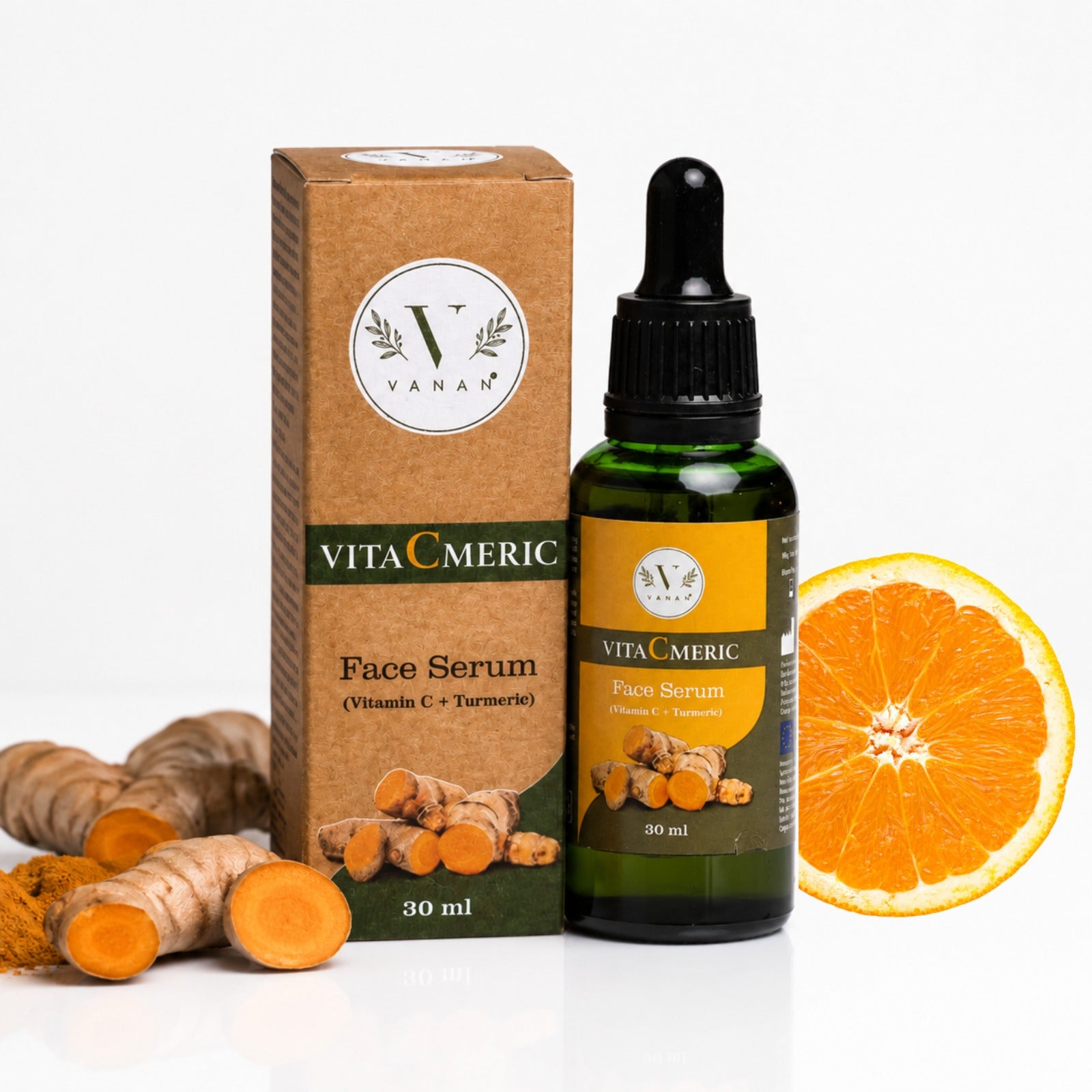
VitaCmeric Face Serum
Vitamin C + Wild Turmeric with Niacinamide Support
Brighten • Calm • Even - Daily Glow
VitaCmeric Face Serum (30 ml) is designed as a lightweight daily serum combining modern skincare actives with botanical ingredients.
Key Ingredients
Vitamin C (10%)
Vitamin C is an antioxidant ingredient known for helping support brighter-looking skin and improving the appearance of uneven tone.
Wild Turmeric (Curcuma aromatica)
Wild turmeric is traditionally used in skincare for calming and skin-balancing properties.
Niacinamide (2%)
Niacinamide supports oil balance and skin barrier function, making it suitable for oily and combination skin types.
Supporting Ingredients
● Hyaluronic Acid – lightweight hydration
● Panthenol (Vitamin B5) – barrier support
● Vitamin E – antioxidant support
● Glycerin – moisture support
Together, these ingredients help support brighter, calmer, and more balanced-looking skin.
Benefits of VitaCmeric Face Serum:
Supports brighter-looking skin with vitamin C.
Helps calm skin with wild turmeric.
Supports oil balance with niacinamide.
Hydrates skin with hyaluronic acid.
Lightweight formula suitable for oily and combination skin
Suitable for daily AM and PM use.
Product page: Click Here
How to Use VitaCmeric Face Serum
For best results, use the serum as part of a simple skincare routine.
Step 1 – Cleanse
Use a gentle cleanser that does not strip the skin barrier.
Step 2 – Apply Serum
Apply 3–4 drops of VitaCmeric face serum to clean skin.
Step 3 – Moisturize
Follow with a lightweight moisturizer.
Step 4 – Sunscreen (Morning Routine)
Apply SPF 30 or higher during the day to help protect the skin.
Consistency is important for visible skincare improvements.
Frequently Asked Questions About Niacinamide
What is niacinamide, and what does it do for skin?
Niacinamide is a form of vitamin B3 used in skincare to support the skin barrier, regulate oil production, and improve the appearance of uneven skin tone.
Is niacinamide good for oily or breakout-prone skin?
Niacinamide is commonly recommended for oily and breakout-prone skin because it helps support balanced sebum production and overall skin health.
Can niacinamide be used with vitamin C?
Yes. Many modern skincare formulations combine niacinamide and vitamin C because they provide complementary benefits for skin tone and barrier support.
How long does niacinamide take to show results?
Most people notice improvements in oil balance within 2 to 4 weeks, while improvements in uneven tone may take 6 to 12 weeks with consistent use.
What percentage of niacinamide is effective?
Many skincare products contain 2% to 5% niacinamide, which is widely considered effective and suitable for daily use.
Can vitamin C serum help brighten skin?
Vitamin C serum is widely used in skincare routines to help improve the appearance of dull skin and support a brighter complexion.
Conclusion
Niacinamide has become one of the most widely used ingredients in modern skincare for oily and breakout-prone skin. By supporting oil balance, strengthening the skin barrier, and helping improve the appearance of uneven tone, it plays an important role in daily skincare routines.
When combined with ingredients such as vitamin C and wild turmeric, niacinamide can help support brighter, calmer, and more balanced-looking skin.
VitaCmeric Face Serum brings these ingredients together in a lightweight formula designed for everyday skincare.
Disclaimer
This article is provided for educational and informational purposes only. The information presented is not intended to replace professional medical advice, diagnosis, or treatment.
VitaCmeric Face Serum is a cosmetic skincare product and is not intended to diagnose, treat, cure, or prevent acne or any medical skin condition.
Always perform a patch test before using any new skincare product. Individual skin responses may vary. For persistent skin concerns, consult a qualified dermatologist.


