


Shop now
Introduction
A baby’s skin is delicate, sensitive, and still developing during the early months of life. Compared to adult skin, infant skin is thinner and more prone to dryness and irritation. Because of this, choosing the best baby lotion becomes an important part of many parents’ daily care routines.
Across Europe, parents increasingly prefer gentle baby moisturizers made with simple, skin-friendly ingredients. The right lotion helps maintain hydration, supports the skin barrier, and keeps baby skin soft and comfortable.
In this guide, we explain what to look for in a baby lotion and explore seven commonly used baby lotion types, including plant-based options widely used in modern baby skincare.
Why Baby Skin Needs a Gentle Lotion
Baby skin loses moisture more quickly than adult skin. Environmental factors such as cold weather, dry indoor heating, and frequent bathing can make baby skin feel dry or tight.
A well-formulated baby lotion can help by:
Supporting the natural skin barrier
Maintaining skin hydration
Reducing dryness and flakiness
Keeping baby skin soft and comfortable
Choosing a gentle moisturizer designed specifically for baby skin is therefore important for daily care.
How to Choose the Best Baby Lotion for Sensitive Skin
When selecting a baby moisturizer, parents often consider several safety and quality factors.
Dermatologically Tested
Products tested for skin compatibility help ensure suitability for delicate skin.
Paediatrician Reviewed
Independent medical review can provide additional reassurance for parents.
Fragrance-Free or Mildly Scented
Strong fragrances are a common cause of irritation in sensitive skin.
Gentle Ingredients
Plant-based ingredients such as aloe vera or coconut oil are widely used in baby skincare.
Minimal Formulation
Baby lotions generally work best when they avoid unnecessary additives.
7 Types of Baby Lotions Parents Commonly Choose
Different baby lotions are designed for different skin needs. The following types are commonly used in European baby skincare.
1. Aloe Vera Baby Lotion
Aloe vera is known for its soothing and hydrating properties. Lightweight lotions containing aloe vera can help keep baby skin comfortable without feeling heavy.
Best for:
Normal baby skin
Warm climates
Daily moisturising routines
2. Coconut Oil Baby Lotion
Coconut oil is widely used in baby skincare because it helps support natural moisture retention.
Best for:
Dry baby skin
Gentle daily nourishment
Light baby massage routines
3. Calendula Baby Lotion
Calendula is a botanical ingredient traditionally used in European herbal skincare for sensitive skin.
Best for:
Sensitive baby skin
Babies prone to redness
Gentle everyday moisturising
4. Colloidal Oatmeal Baby Lotion
Colloidal oatmeal is often recommended for very dry or sensitive skin because it helps support the skin barrier.
Best for:
Very dry baby skin
Winter dryness
Skin barrier support
5. Shea Butter Baby Lotion
Shea butter is a rich plant-based moisturizer that helps protect the skin from dryness.
Best for:
Dry climates
Babies with dry skin
Extra moisture protection
6. Lightweight Daily Baby Moisturisers
Some lotions combine several gentle ingredients to create a balanced everyday moisturizer suitable for daily use.
Best for:
Normal baby skin
Daily skincare routines
Post-bath hydration
7. Barrier-Support Baby Lotions
Some modern baby lotions include ingredients designed to help support the skin barrier.
Best for:
Dry or sensitive skin
Dermatologist-recommended routines
Featured Baby Lotion Option
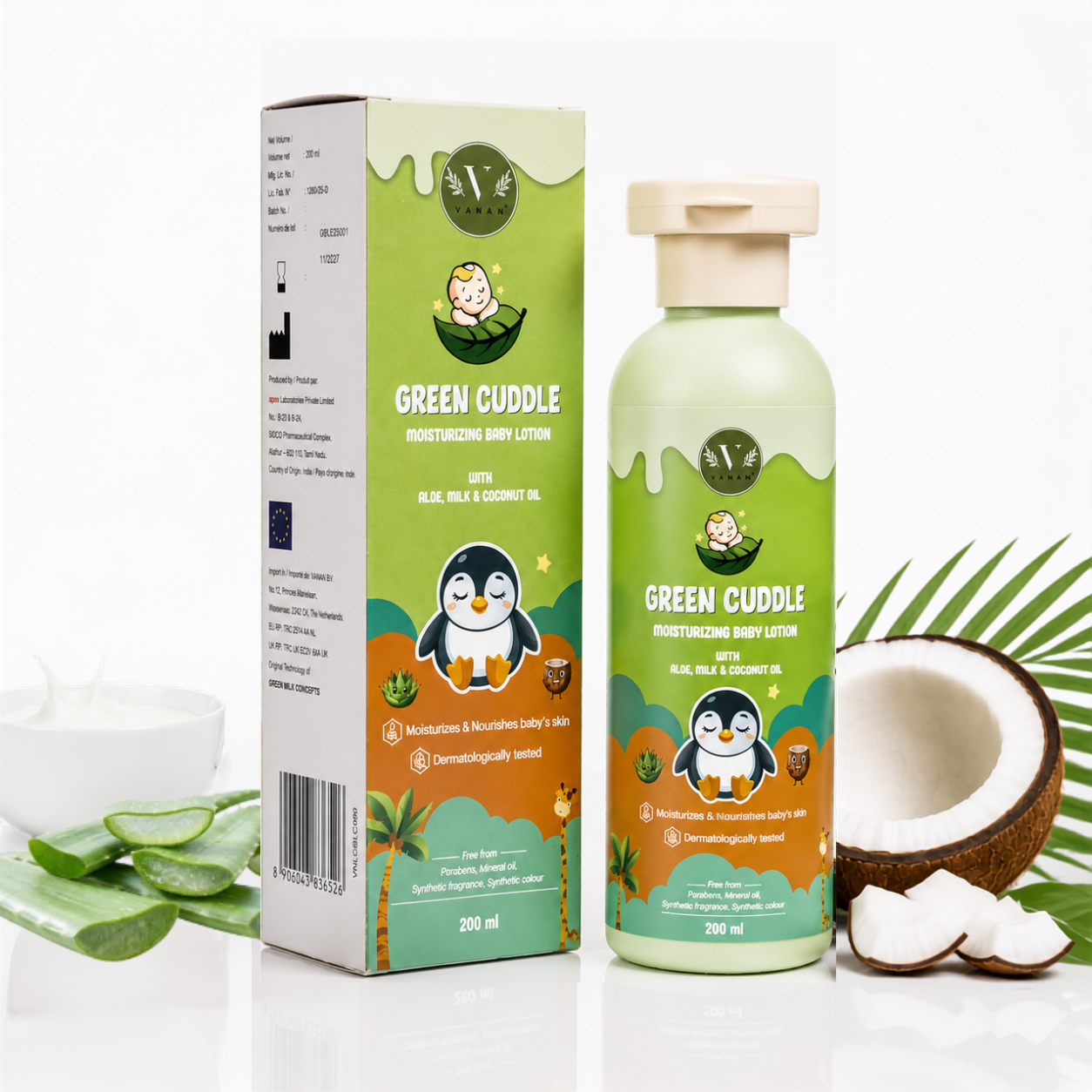
One example of a gentle baby moisturizer available in Europe is Vanan Herbal Green Cuddle Baby Lotion, formulated with skin-friendly moisturizing ingredients.
Key Ingredients
Aloe Vera
Helps soothe and hydrate delicate baby skin.
Coconut Oil
Supports natural moisture retention and nourishment.
Milk Proteins
Traditionally used in skincare to help soften and condition the skin.
Vitamin E
An antioxidant that supports the skin barrier.
This lotion is designed as a lightweight daily moisturiser for babies aged three months and older.
Parents interested in learning more can explore the product here: Click Here
How to Apply Baby Lotion Safely
Applying baby lotion can easily become part of a simple daily routine.
1. Apply After Bath
Baby lotion works best when applied to slightly damp skin.
2. Use a Small Amount
A small amount is usually enough for the entire body.
3. Warm the Lotion
Rub the lotion between your palms before applying.
4. Apply Gently
Use light strokes and avoid the eye area.
5. Patch Test First
Test a small amount on the skin before full use.
When Should You Start Using Baby Lotion?
Many parents begin using a moisturizer once their baby's skin shows signs of dryness. For very young infants, it is best to consult a healthcare professional before introducing new skincare products.
For babies older than three months, gentle moisturizers are commonly used as part of a daily skincare routine.
Frequently Asked Questions
Is baby lotion safe for newborn skin?
Many gentle baby lotions are designed for delicate skin. However, for newborns it is always advisable to consult a healthcare professional before introducing a new skincare product.
How often should baby lotion be applied?
Most parents apply baby lotion once daily after bathing to help maintain skin hydration.
What ingredients should parents avoid in baby lotions?
Parents often prefer formulations free from strong fragrances, parabens, and unnecessary additives.
Final Thoughts
Choosing the best baby lotion does not need to be complicated. The most important factors are gentle ingredients, dermatological safety, and suitability for your baby’s skin.
Many parents prefer simple moisturizers made with skin-friendly ingredients such as aloe vera and coconut oil. Used regularly after bathing, a gentle lotion can help maintain soft and comfortable baby skin.
Products such as Vanan Herbal Green Cuddle Baby Lotion offer a lightweight daily moisturizing option designed for delicate baby skin.
Disclaimer
This article is intended for educational purposes only. Baby skincare products are cosmetic formulations and are not intended to diagnose, treat, cure, or prevent any medical condition. Always consult a qualified healthcare professional if you have concerns about your baby’s skin.


